
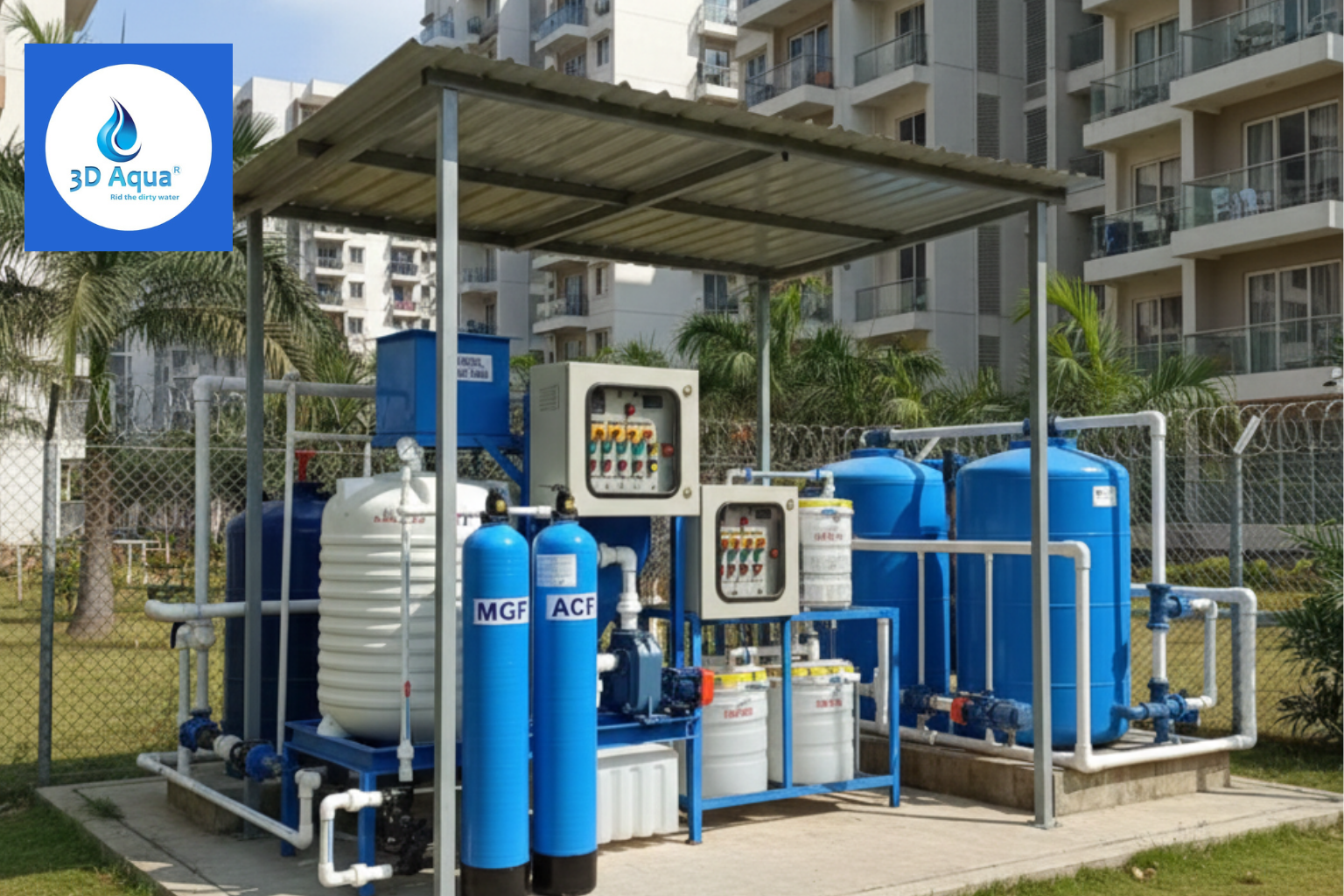
In today’s urban India, water management is no longer a choice — it is a necessity. With rising water scarcity and strict pollution norms, many housing communities are now focusing on ETP Plant Installation for Residential Society projects.
An Effluent Treatment Plant (ETP) helps treat wastewater before it is released into the environment or reused. Installing an ETP in a residential society not only protects the environment but also ensures compliance with government regulations.
In this article, we will explain everything you need to know about ETP installation, its benefits, process, cost factors, and maintenance.
For more information, call us at: 6262629090
Visit our website: www.3daqua.in
What is an ETP Plant?
An Effluent Treatment Plant (ETP) is a system designed to treat wastewater generated from residential or commercial sources. In a residential society, wastewater usually comes from:
- Kitchens
- Bathrooms
- Laundry areas
- Common cleaning zones
- Parking wash areas
The main goal of an ETP plant is to remove harmful chemicals, solids, oils, and pollutants from wastewater before discharge or reuse.
For more information, call us at: 6262629090
Visit our website: www.3daqua.in
Why is ETP Plant Installation for Residential Society Important?
Rapid urban development has increased wastewater generation. Without proper treatment, this wastewater can contaminate groundwater and nearby water bodies.
Here’s why ETP Plant Installation for Residential Society is important:
1. Environmental Protection
Untreated wastewater can harm soil, rivers, and lakes. An ETP reduces pollution and protects nature.
2. Legal Compliance
State Pollution Control Boards in India have strict rules for wastewater discharge. Installing an ETP ensures your society follows environmental laws.
3. Water Reuse
Treated water can be reused for:
- Gardening
- Flushing
- Car washing
- Landscaping
This reduces dependency on fresh water supply.
4. Better Hygiene
Proper wastewater treatment prevents foul smell and health risks within the society.
For more information, call us at: 6262629090
Visit our website: www.3daqua.in
How Does an ETP Plant Work?
An ETP works in different stages to remove impurities from wastewater.
1. Primary Treatment
- Removal of large solids
- Sedimentation process
- Oil and grease separation
2. Secondary Treatment
- Biological treatment using bacteria
- Breakdown of organic matter
- Aeration process
3. Tertiary Treatment
- Filtration
- Chemical treatment
- Disinfection
After these stages, the treated water becomes safe for reuse or discharge.
For more information, call us at: 6262629090
Visit our website: www.3daqua.in
Key Components of an ETP Plant
A typical residential ETP system includes:
- Collection tank
- Equalization tank
- Aeration tank
- Clarifier
- Sludge drying bed
- Filtration unit
- Control panel
Each component plays a vital role in ensuring effective treatment.
For more information, call us at: 6262629090
Visit our website: www.3daqua.in
Factors to Consider Before ETP Plant Installation for Residential Society
Before installing an ETP, societies should evaluate several important factors.
1. Size of the Society
The number of flats and residents determines the capacity of the plant.
2. Water Consumption
Daily water usage affects wastewater generation.
3. Available Space
ETP requires dedicated installation space.
4. Budget
Initial setup cost and long-term maintenance must be considered.
5. Government Approvals
Necessary permissions from local authorities are required before installation.
For more information, call us at: 6262629090
Visit our website: www.3daqua.in
Step-by-Step Process of ETP Plant Installation
Understanding the process helps societies plan better.
Step 1: Site Inspection
Engineers inspect the society and calculate wastewater generation.
Step 2: Design and Planning
A customized ETP design is prepared based on capacity and requirements.
Step 3: Civil Work
Construction of tanks and foundation work begins.
Step 4: Equipment Installation
Machinery, pumps, blowers, and filters are installed.
Step 5: Testing and Commissioning
The plant is tested to ensure proper functioning.
Step 6: Training
Staff members are trained for basic operation and maintenance.
For more information, call us at: 6262629090
Visit our website: www.3daqua.in
Cost of ETP Plant Installation for Residential Society
The cost depends on multiple factors such as:
- Capacity (KLD – Kilolitres per day)
- Technology used
- Material quality
- Automation level
- Location
For a mid-sized residential society, the cost may range from ₹8 lakh to ₹25 lakh or more, depending on requirements.
Maintenance cost includes:
- Electricity consumption
- Chemicals
- Labour charges
- Spare parts
Proper planning can help reduce operational expenses.
For more information, call us at: 6262629090
Visit our website: www.3daqua.in
Benefits of Installing an ETP Plant in Residential Societies
Installing an ETP offers long-term advantages.
✔ Water Conservation
Reusing treated water reduces tanker water expenses.
✔ Reduced Environmental Impact
Lower pollution levels improve community reputation.
✔ Compliance with Pollution Norms
Avoid penalties and legal notices.
✔ Property Value Increase
Environment-friendly societies attract more buyers.
For more information, call us at: 6262629090
Visit our website: www.3daqua.in
Maintenance Tips for ETP Plants
Regular maintenance ensures smooth functioning.
- Conduct routine inspections
- Monitor pH levels and chemical dosing
- Clean filters regularly
- Remove sludge on time
- Maintain proper records
Neglecting maintenance can reduce efficiency and increase repair costs.
For more information, call us at: 6262629090
Visit our website: www.3daqua.in
Common Challenges in ETP Installation
Some societies face difficulties during installation.
Space Constraints
Older buildings may not have enough space.
High Initial Cost
Budget approval can be challenging.
Lack of Awareness
Many residents do not understand the importance of wastewater treatment.
However, long-term savings and environmental benefits outweigh these challenges.
For more information, call us at: 6262629090
Visit our website: www.3daqua.in
ETP vs STP – What’s the Difference?
Many people confuse ETP with STP (Sewage Treatment Plant).
- ETP treats industrial and chemically contaminated wastewater.
- STP mainly treats domestic sewage.
In residential societies, sometimes both systems are combined depending on wastewater type.
For more information, call us at: 6262629090
Visit our website: www.3daqua.in
Future of Wastewater Treatment in Residential India
With increasing urbanization, wastewater treatment will become compulsory for all large residential projects. Smart cities and green building concepts strongly promote water recycling systems.
Societies that invest in ETP Plant Installation for Residential Society today will benefit from sustainable living tomorrow.
For more information, call us at: 6262629090
Visit our website: www.3daqua.in
FAQs
1. Is ETP mandatory for residential societies in India?
Yes, large residential societies generating significant wastewater are required to install treatment systems as per Pollution Control Board guidelines.
2. How much space is required for ETP installation?
Space depends on plant capacity. A small society may need 300–600 sq. ft., while larger societies require more.
3. Can treated water be used for drinking?
No. ETP-treated water is generally used for non-potable purposes like flushing and gardening.
4. How often should an ETP be serviced?
Basic checks should be done daily, while professional servicing is recommended every 3–6 months.
Contact 3D Aqua – ETP Plant Installation for Residential Society
Manufacturing & Support:
- Okhla Industrial Area, Delhi
- Sector 10, Noida, Uttar Pradesh
Contact Us:
- 0120-4153030 | 7011143366 | 6262629090
- 24/7 Helpline: +91 8963089630
- Email: info@3daqua.in
Learn More:
- Website: www.3daqua.in
- Explore Softener Products: www.3daqua.in/products
- Happy Clients:https://3daqua.in/clients