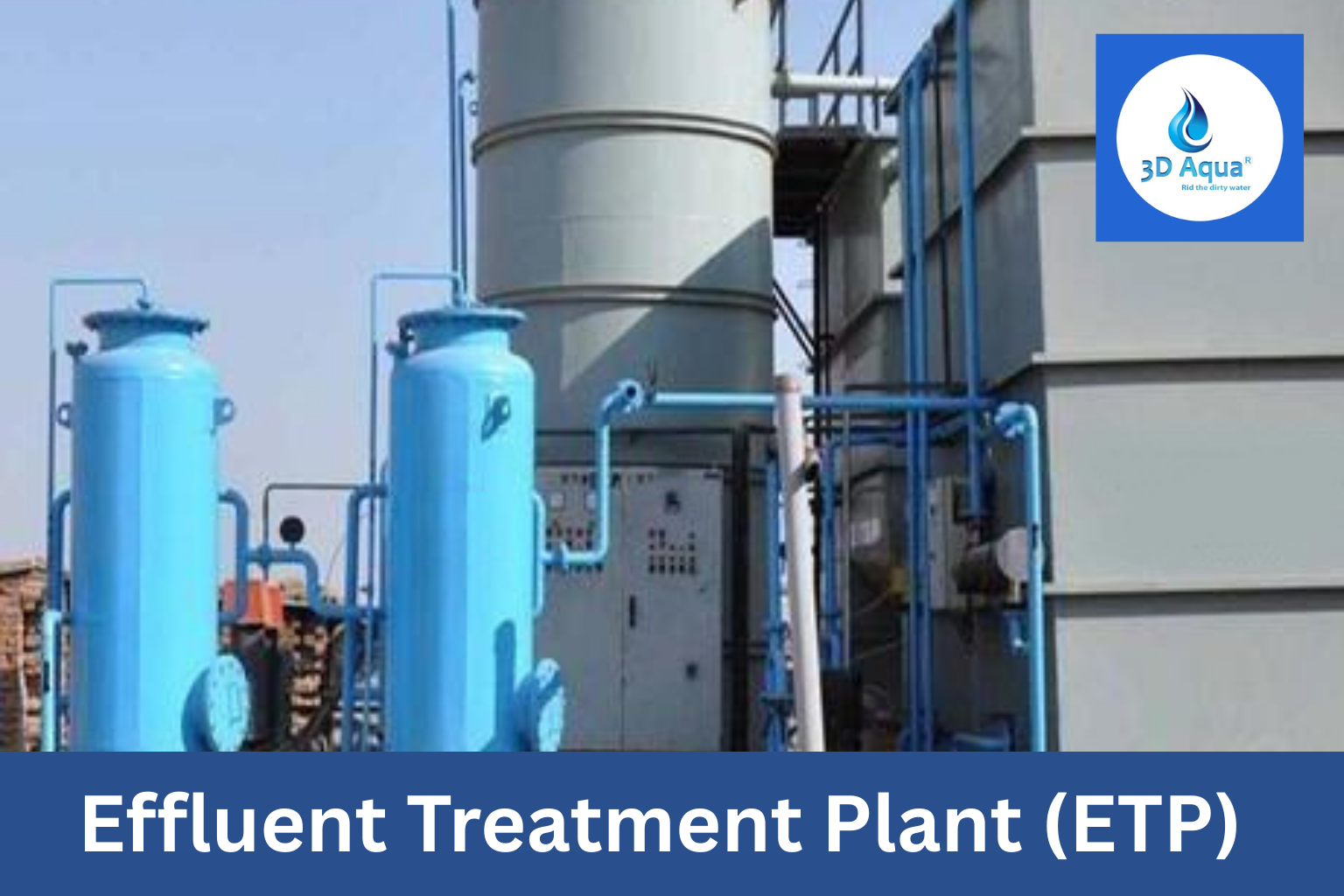
An Effluent Treatment Plant (ETP) is a specialized system designed to treat industrial wastewater and remove contaminants before discharge or reuse. With increasing environmental regulations, water scarcity, and sustainability goals, modern ETPs have evolved from basic treatment units into highly engineered, multi-stage treatment systems capable of achieving near-zero pollutant discharge.
Industries such as textiles, pharmaceuticals, chemicals, food processing, tanneries, power plants, and refineries generate complex effluents containing organic load, toxic chemicals, heavy metals, oil & grease, and dissolved solids. Advanced ETP design ensures compliance with environmental norms while enabling water recovery and resource optimization.
For more information, call us at: 6262629090
Visit our website: www.3daqua.in
Characteristics of Industrial Effluent
Industrial effluent differs significantly from domestic wastewater due to:
- High Chemical Oxygen Demand (COD) and Biological Oxygen Demand (BOD)
- Presence of non-biodegradable and toxic compounds
- Extreme pH, temperature, and salinity
- Variable flow rates and pollutant concentrations
Understanding effluent characteristics through detailed wastewater analysis is the foundation of advanced ETP design.
For more information, call us at: 6262629090
Visit our website: www.3daqua.in
Advanced ETP Process Flow
A modern Effluent Treatment Plant typically consists of four major treatment stages, each optimized for specific contaminants.
1. Preliminary & Primary Treatment
This stage focuses on removing large solids and equalizing effluent characteristics.
Key Units:
- Bar Screens & Grit Chambers
- Oil & Grease Traps
- Equalization Tanks
- Primary Clarifiers
Technical Purpose:
- Protect downstream equipment
- Stabilize hydraulic and organic shock loads
- Improve overall process efficiency
Advanced plants use automated pH control systems and online flow monitoring to enhance performance.
For more information, call us at: 6262629090
Visit our website: www.3daqua.in
2. Secondary (Biological) Treatment
Biological treatment removes dissolved and colloidal organic matter using microorganisms.
Common Advanced Technologies:
- Activated Sludge Process (ASP)
- Moving Bed Biofilm Reactor (MBBR)
- Sequential Batch Reactor (SBR)
- Membrane Bioreactor (MBR)
Advanced Insight:
- MBBR and MBR systems provide higher biomass concentration and better shock-load resistance.
- MBR systems produce ultra-low turbidity effluent suitable for tertiary treatment and reuse.
This stage significantly reduces BOD and COD through aerobic or anaerobic microbial degradation.
For more information, call us at: 6262629090
Visit our website: www.3daqua.in
3. Tertiary & Advanced Treatment
Tertiary treatment ensures compliance with stringent discharge or reuse standards.
Advanced Treatment Units:
- Pressure Sand Filters (PSF)
- Activated Carbon Filters (ACF)
- Ultrafiltration (UF)
- Reverse Osmosis (RO)
- Advanced Oxidation Processes (AOPs)
Key Benefits:
- Removal of residual organics, color, and dissolved salts
- Enhanced water recovery
- Production of high-quality treated water
AOPs, such as ozone and hydrogen peroxide-based systems, are increasingly used for refractory and toxic compounds.
4. Sludge Treatment & Disposal
Sludge management is a critical but often underestimated component of ETPs.
Advanced Sludge Handling Techniques:
- Sludge Thickening
- Filter Press / Centrifuge Dewatering
- Thermal Drying
- Co-processing in Cement Kilns
Efficient sludge treatment reduces disposal costs and environmental risk.
Zero Liquid Discharge (ZLD) Integration
Modern industries are shifting toward Zero Liquid Discharge (ZLD) systems, where no wastewater is discharged outside the facility.
ZLD System Components:
- Advanced RO Systems
- Multiple Effect Evaporators (MEE)
- Agitated Thin Film Dryers (ATFD)
- Crystallizers
Advantages of ZLD:
- Complete water reuse
- Regulatory compliance in water-stressed regions
- Long-term cost optimization
For more information, call us at: 6262629090
Visit our website:www.3daqua.in
Automation & Digital Monitoring in ETPs
Advanced ETPs integrate SCADA and IoT-based monitoring systems for real-time process control.
Key Parameters Monitored:
- pH, ORP, DO
- Flow rates
- COD/BOD (online analyzers)
- Energy consumption
Automation improves treatment efficiency, reduces chemical usage, and minimizes human error.
Sustainability & Energy Optimization
Modern ETPs are designed with sustainability at their core:
- Energy-efficient aeration systems
- Biogas recovery from anaerobic treatment
- Treated water reuse for cooling, washing, and gardening
- Reduced carbon footprint
An optimized ETP contributes directly to an organization’s ESG and environmental compliance goals.
Regulatory Compliance & Standards
ETPs must comply with national and international standards such as:
- Pollution Control Board (PCB) norms
- Industrial discharge guidelines
- Water reuse standards for process applications
Advanced design ensures future-proof compliance even as regulations become more stringent.
Contact Us
We’re here to help you with reliable and sustainable Effluent Treatment Plant (ETP) solutions. Whether you need consultation, system design, installation, upgradation, or maintenance support, our experts are ready to assist you.
🏭 Manufacturing & Support:
- Okhla Industrial Area, Delhi
- Sector 10, Noida, Uttar Pradesh
📞 Contact Us:
- 0120-4153030 | 7011143366 | 6262629090
- 24/7 Helpline: +91 8963089630
- Email: info@3daqua.in
🌐 Learn More:
- Website: www.3daqua.in
- Explore Softener Products: www.3daqua.in/products
- Happy Clients: https://3daqua.in/clients
Conclusion
An Effluent Treatment Plant is no longer just a compliance requirement—it is a strategic asset for industrial sustainability. Advanced ETP technologies enable industries to reduce environmental impact, recover valuable resources, and ensure long-term operational resilience.
By integrating innovative biological systems, advanced membrane technologies, automation, and ZLD concepts, modern ETPs represent the future of industrial wastewater management.