
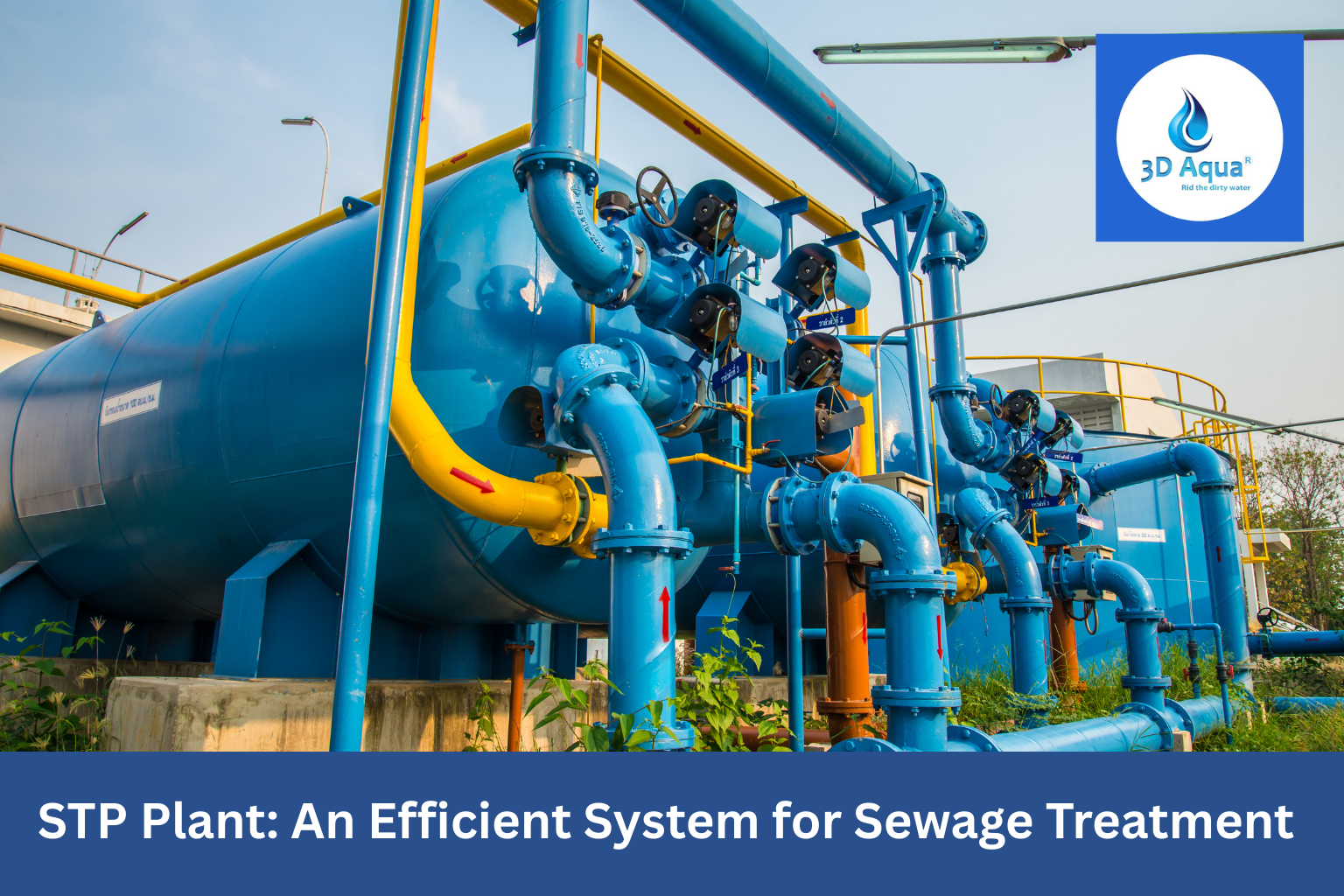
With increasing water consumption and urban expansion, managing sewage has become a major challenge. Disposing of untreated wastewater leads to environmental pollution, health risks, and water scarcity. A Sewage Treatment Plant (STP) provides a reliable solution by treating wastewater and making it suitable for reuse or safe discharge.
An STP plant is an essential component of modern residential, commercial, and institutional infrastructure.
What Is an STP Plant?
An STP plant is a treatment system designed to process sewage generated from domestic and commercial activities. It removes organic waste, suspended solids, and harmful microorganisms from wastewater, producing treated water that meets environmental standards.
STP plants are commonly installed in apartments, hotels, hospitals, offices, and educational campuses.
For more information, call us at: 6262629090
Visit our website: www.3daqua.in
STP Plant Working Process
The sewage treatment process is carried out in multiple stages to ensure effective purification:
1. Inlet and Screening
Wastewater enters the plant where large solids like plastic, paper, and debris are removed using mechanical screens.
2. Primary Treatment
Heavier particles settle at the bottom of the tank, while oils and grease float to the surface and are separated.
3. Biological Treatment
Microorganisms break down organic matter using biological processes such as MBBR or Activated Sludge, significantly reducing pollution levels.
4. Secondary Clarification
Remaining suspended solids are settled, producing clearer water.
5. Disinfection
The treated water is disinfected using chlorine, UV, or ozone to eliminate harmful pathogens.
For more information, call us at: 6262629090
Visit our website: www.3daqua.in
Benefits of Installing an STP Plant
Environmental Protection
Prevents untreated sewage from polluting rivers, lakes, and groundwater.
Water Conservation
Allows reuse of treated water for gardening, toilet flushing, and cooling applications.
Regulatory Compliance
Helps meet pollution control board norms and legal requirements.
Cost Efficiency
Reduces dependency on freshwater and lowers water bills.
Compact and Modern Design
Today’s STPs are space-saving, odor-free, and easy to operate.
For more information, call us at: 6262629090
Visit our website: www.3daqua.in
Applications of STP Plants
STP plants are suitable for:
- Residential complexes and housing societies
- Commercial buildings and IT parks
- Hospitals and healthcare facilities
- Hotels, malls, and resorts
- Schools, colleges, and institutions
They can be customized based on capacity and reuse requirements.
Importance of STP in Sustainable Development
As freshwater resources decline, wastewater recycling becomes essential. STP plants support sustainable development by reducing pollution, conserving water, and promoting responsible resource management.
By treating sewage at the source, STPs reduce the load on municipal systems and protect natural water bodies.
For more information, call us at: 6262629090
Visit our website: www.3daqua.in
Contact 3D Aqua Today – Advanced STP Plant Solutions
Struggling with sewage management, foul odors, or pollution control compliance? Looking for a reliable and efficient STP plant for your residential, commercial, or industrial project?
Partner with 3D Aqua, India’s trusted name in water and wastewater treatment, delivering high-performance Sewage Treatment Plants (STP) designed for long-term efficiency, environmental safety, and water reuse.
🏭 Manufacturing & Support Locations:
Okhla Industrial Area, Delhi
Sector 10, Noida, Uttar Pradesh
📞 Contact Us:
0120-4153030 | 7011143366 | 6262629090
24/7 Helpline: +91 8963089630
📧 Email: info@3daqua.in
🌐 Learn More:
Website: www.3daqua.in
Explore STP Solutions: www.3daqua.in/products
Our Happy Clients: https://3daqua.in/clients
Conclusion
A Sewage Treatment Plant (STP) is a smart and sustainable investment for effective wastewater management. It ensures environmental safety, water reuse, and regulatory compliance while supporting long-term sustainability goals.
Installing an STP today means contributing to a cleaner and healthier future.